Wet Ground, Real Consequences: Why New Jersey's Water Table Demands a Different Approach to Waterproofing and Drainage
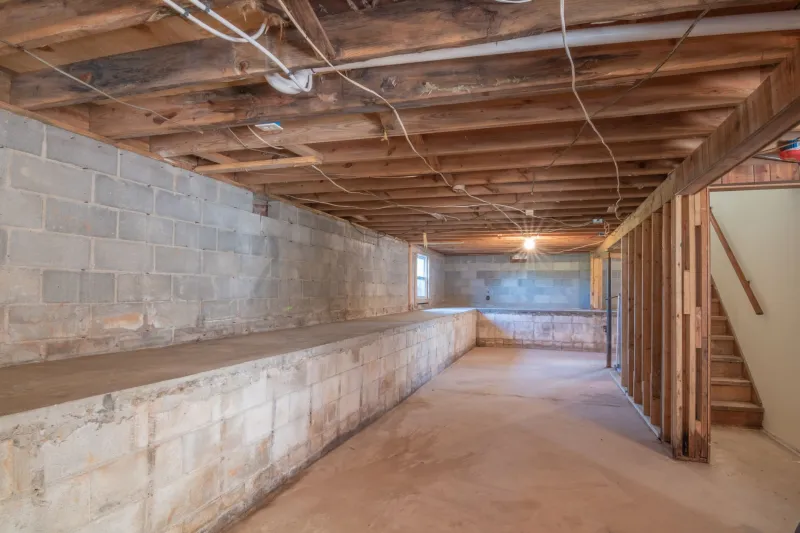
Water is, without question, the single greatest long-term threat to residential and commercial structures in New Jersey. Not fire. Not wind. Not even the occasional seismic tremor that rattles the Delaware Valley. Water—persistent, patient, and extraordinarily resourceful—finds its way into buildings through paths that are often invisible until the damage is already done.
What makes New Jersey particularly challenging is not simply that it rains here. It does rain here, roughly 46 inches annually on average. The deeper issue lies beneath the surface: in the soil composition, the water table elevation, the legacy of glacial geology across the northern half of the state, and the coastal hydrology that shapes conditions from the Raritan Bay south to Cape May. These are factors that national construction standards address only in general terms—and general terms are not sufficient when your basement is taking on water.
The Geological Reality Beneath New Jersey's Surface
To understand why water management is so complex in New Jersey, it helps to understand what lies underfoot.
Northern New Jersey—roughly the area above Interstate 78—sits on terrain shaped by repeated glacial advances and retreats. The last glacier retreated approximately 12,000 years ago, leaving behind a highly variable mix of glacial till, clay lenses, outwash sands, and fractured bedrock. These materials do not drain uniformly. Clay-heavy soils, common throughout Morris, Somerset, and Hunterdon counties, are nearly impermeable. Water introduced into these soils—whether from rainfall, snowmelt, or a broken irrigation line—has nowhere to go quickly. It saturates, it pools, and it presses laterally against any below-grade structure it encounters.
Central New Jersey transitions into the Coastal Plain, where sandy, more permeable soils dominate. The intuitive assumption might be that sandy soil drains well and therefore presents fewer problems. In practice, the high water table in much of Middlesex, Monmouth, and Ocean counties means that even well-draining soils can be saturated at relatively shallow depths for extended periods, particularly during spring thaw and after prolonged rainfall events.
South Jersey and the Shore communities face their own distinct challenges. Proximity to tidal waterways, bay systems, and the Atlantic itself means that groundwater elevations can shift with tidal cycles—a phenomenon that surprises homeowners who have never encountered it before. A basement that is dry at low tide may show seepage at high tide, even miles from the nearest beach.
How Water Enters Buildings: The Mechanisms Contractors Must Address
There is a common misconception that basement water intrusion is primarily a roofing or surface drainage problem—that if gutters are clean and grading slopes away from the foundation, water will not enter below grade. This is partially true and largely insufficient.
Water reaches foundations through three primary mechanisms:
Hydrostatic pressure occurs when saturated soil surrounding a foundation exerts direct force against below-grade walls and floor slabs. The weight of water-laden soil is considerable, and over time it exploits every crack, cold joint, and porous section of concrete or block construction. In New Jersey's clay-heavy northern soils, hydrostatic pressure following a significant rain event can be dramatic.
Lateral seepage moves water horizontally through soil until it contacts a structure. Foundation walls act as barriers that interrupt this horizontal movement—but any gap, crack, or deteriorated mortar joint becomes an entry point.
Capillary action draws moisture upward through porous concrete and masonry, even against gravity. This mechanism accounts for the persistent dampness that many New Jersey homeowners observe on basement walls even during dry weather. It is not a leak in the conventional sense; it is the material itself conducting moisture from the surrounding soil.
Addressing only one or two of these mechanisms while ignoring the third is a common reason why basement waterproofing projects fail.
Regional Solutions That Go Beyond the National Standard
National building codes establish minimum standards for below-grade waterproofing and drainage. In New Jersey, those minimums are frequently inadequate given local conditions. Experienced local contractors understand this gap and design solutions accordingly.
Interior drainage systems with sump management are among the most reliable solutions for New Jersey's high water table environments. A properly designed interior French drain system—installed within the perimeter of the basement floor—intercepts water before it can rise to damaging levels and directs it to a sump pit. The sump pump then discharges that water away from the structure. In areas with chronic high water table conditions, dual-pump systems with battery backup are strongly recommended, as power outages frequently coincide with the storm events that produce the highest water intrusion risk.
Exterior waterproofing membranes and drainage boards provide the most comprehensive protection when applied correctly during new construction or during full excavation of an existing foundation. These systems create a physical barrier against hydrostatic pressure and lateral seepage, while drainage boards channel water downward to a perimeter footing drain rather than allowing it to press against the wall. In New Jersey's clay soil regions, the drainage board component is particularly critical—without it, even an intact waterproofing membrane can fail under sustained hydrostatic load.
Grading and surface drainage corrections remain essential complements to any below-grade system. Soil settlement over time frequently reverses the positive grading installed during original construction, creating conditions where surface water flows toward rather than away from the foundation. Downspout extensions, swales, and corrected grading can eliminate a significant portion of the water volume that would otherwise challenge below-grade systems.
Crawl space encapsulation addresses a related challenge common in older New Jersey homes, particularly in South Jersey. Unsealed crawl spaces allow ground moisture to evaporate upward into the living space, contributing to mold, wood rot, and elevated humidity throughout the structure. Full encapsulation with vapor barriers, insulation, and controlled ventilation or dehumidification transforms a liability into a stable, conditioned space.
The Compliance Dimension: New Jersey Codes and Water Management
New Jersey's construction code, adopted under the Uniform Construction Code Act, includes specific provisions for below-grade waterproofing and drainage that differ in meaningful ways from the International Residential Code baseline used in many other states. Local amendments address the state's particular soil and groundwater conditions, and municipal inspectors in water-challenged areas often apply additional scrutiny to drainage-related work.
Contractors working in New Jersey must be familiar with these provisions and prepared to document compliance. Waterproofing and drainage work that does not meet code not only creates legal and insurance exposure—it also fails to protect the property in the ways the homeowner expects. Selecting a contractor with demonstrated experience navigating New Jersey's specific code environment is not a secondary consideration. It is fundamental to the success of any below-grade project.
Protecting Your Investment from the Ground Up
New Jersey homeowners invest significantly in their properties—and water intrusion, left unaddressed, erodes that investment steadily and silently. Mold remediation, structural repair, finished basement reconstruction, and property value loss are all downstream consequences of inadequate water management.
The right time to address these challenges is before damage occurs—during new construction, during a basement finishing project, or during a planned exterior excavation. Retrofitting solutions after the fact is almost always more expensive and more disruptive than building correctly from the beginning.
At Gleeson Contractors NJ, every project that involves below-grade work begins with a thorough assessment of site-specific water conditions. Soil type, water table elevation, existing drainage infrastructure, and the structure's history of water intrusion all inform the solution design. There is no universal answer to New Jersey's water challenges—only solutions that are properly matched to the specific conditions of each property.
That local knowledge is not incidental. It is the difference between a basement that stays dry for decades and one that floods every spring.