Seven Costly Surprises Awaiting New Jersey Homeowners Who Take On Major Renovations Alone
Let's be direct: the instinct to save money on a major renovation is not only understandable, it is financially responsible. Material costs have risen sharply in recent years, and the idea of eliminating labor expenses entirely has genuine appeal. There is also a quiet satisfaction in the notion of building something yourself—of having a tangible stake in your home's transformation.
But there is a meaningful difference between cosmetic updates—painting a room, replacing cabinet hardware, installing a backsplash—and major renovations involving structural work, electrical systems, plumbing, or significant square footage. In New Jersey, the gap between these two categories is not merely one of complexity. It is a gap defined by legal requirements, safety codes, insurance implications, and financial risk that can turn a well-intentioned project into a prolonged and expensive ordeal.
Here are seven of the most consequential surprises that New Jersey homeowners encounter when tackling major renovations without professional contractor support.
1. Permit Violations That Create Legal and Financial Liability
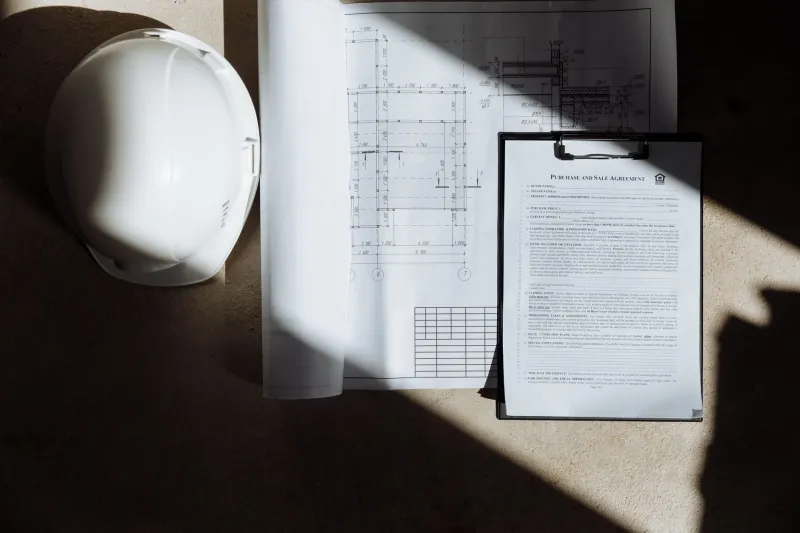
New Jersey's municipalities are not uniform in their permitting requirements, but they are consistently serious about enforcing them. Any renovation that involves structural modifications, electrical work, plumbing changes, HVAC alterations, or additions to the home's footprint almost certainly requires one or more permits—and those permits require inspections conducted by licensed officials.
Homeowners who proceed without permits often discover the consequences at the worst possible moment: when they attempt to sell the property. Unpermitted work can trigger mandatory remediation, force sellers to disclose material defects, or cause a sale to fall through entirely. In some cases, municipalities can compel a homeowner to demolish completed work that was not properly inspected and approved.
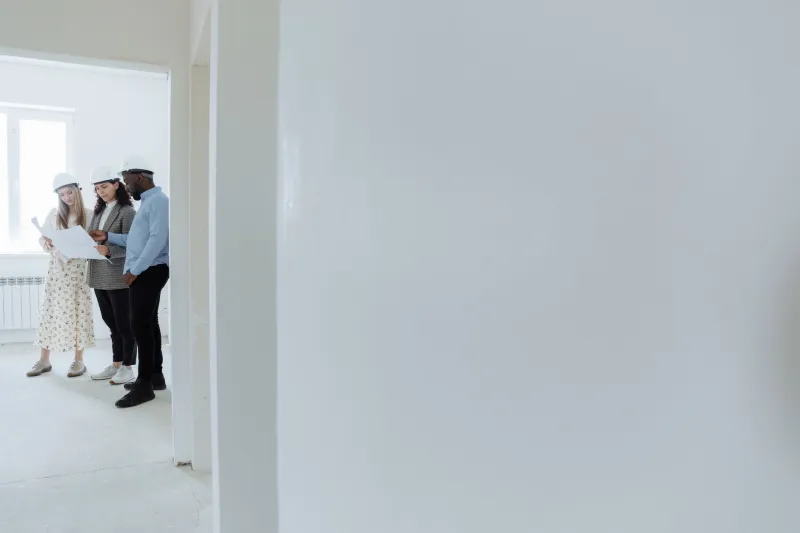
Licensed contractors navigate New Jersey's permitting landscape daily. They know which projects require permits in which jurisdictions, how to prepare documentation that satisfies local inspectors, and how to schedule inspections efficiently. That knowledge is not incidental—it is a core part of what professional contracting services provide.
2. Underestimating Material Quantities and Waste
Professional estimators calculate material requirements based on experience, industry formulas, and an understanding of how waste factors into real-world installation. A licensed contractor ordering tile for a bathroom renovation accounts for cuts, breakage, pattern matching, and future repair reserves. A homeowner working from a square-footage figure alone frequently orders insufficient quantities—then discovers that the specific tile or material they selected has been discontinued or is unavailable in the same dye lot.
The resulting delays, return trips to the supplier, and potential for mismatched materials can add hundreds or thousands of dollars to a project's cost while extending timelines significantly.
3. Discovering Concealed Conditions That Require Professional Intervention
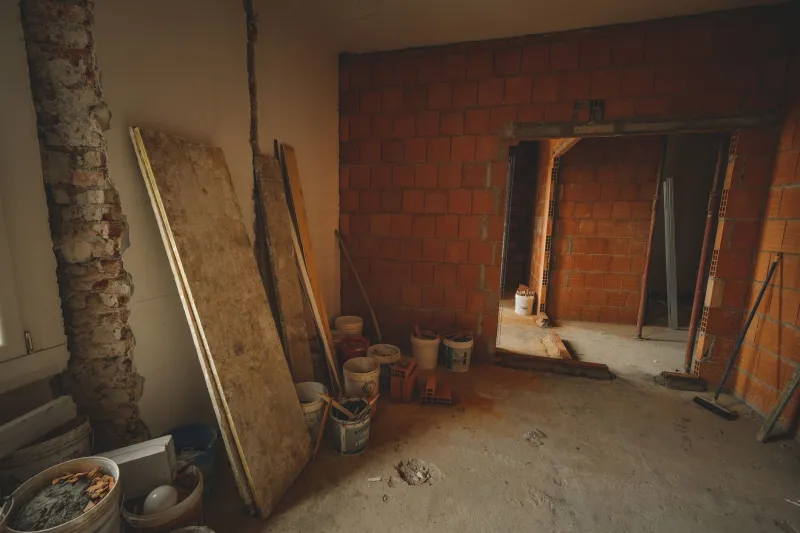
One of the most consistent—and most jarring—experiences in major renovation is the discovery of what lies behind walls, under floors, or above ceilings. Older New Jersey homes, in particular, frequently conceal conditions that require immediate professional attention: deteriorated knob-and-tube wiring, cast iron drain lines in advanced stages of corrosion, asbestos-containing insulation, or structural members compromised by moisture or pest damage.
A homeowner who opens a wall expecting to reframe a doorway and instead finds active water damage or evidence of mold is suddenly confronted with a situation that exceeds the scope of any tutorial. More critically, handling certain materials—particularly asbestos and lead paint, both common in New Jersey's older housing stock—without proper certification is not only inadvisable but potentially illegal.
Professional contractors anticipate the possibility of concealed conditions and have established protocols for addressing them safely and in compliance with applicable regulations.
4. The True Cost of Time
DIY renovation timelines are almost universally optimistic. What a professional crew completes in two weeks may occupy a homeowner's evenings and weekends for three months—particularly when work must pause for research, supply runs, or the correction of errors. During that period, the affected areas of the home are typically unusable, and the psychological toll of an extended, incomplete project is not insignificant.
For homeowners with families, the disruption of a kitchen or bathroom renovation that stretches across months carries real costs: takeout meals, temporary accommodations, storage fees for displaced belongings. When these expenses are totaled honestly, the labor savings that motivated the DIY approach often diminish considerably.
5. Voided Warranties and Insurance Complications
Many building materials—roofing systems, windows, waterproofing membranes, HVAC equipment—carry manufacturer warranties that are explicitly conditioned on installation by a licensed professional. Homeowner-installed products may be technically functional but legally unwarrantied, leaving the homeowner with no recourse if a defect emerges within what would otherwise have been the coverage period.
Insurance implications can be equally significant. A homeowner's policy may not cover damage resulting from unpermitted work or amateur installation. In the event of a fire traced to improperly completed electrical work, or water damage attributable to a plumbing connection that was not up to code, an insurer may deny the claim—compounding the original mistake with a catastrophic financial consequence.
6. Tool and Equipment Costs That Erode the Savings Calculation
Professional renovation requires professional tools. Tile saws, concrete mixers, framing nailers, laser levels, and specialty equipment for plumbing or electrical work represent significant capital investments. Homeowners who price these items—or their rental equivalents—often find that the tool budget alone rivals a substantial portion of what they had hoped to save on labor.
Contractors arrive with the right equipment for every phase of a project. That equipment is maintained, calibrated, and operated by individuals trained to use it efficiently and safely. The efficiency gains alone—a task that takes a professional one hour may take an amateur an entire day—represent a form of cost that rarely appears in a homeowner's initial savings estimate.
7. Rework: The Most Expensive Line Item You Didn't Budget For
Perhaps the most financially painful outcome of an unsuccessful DIY renovation is the cost of professional remediation after the fact. Contractors called in to correct amateur work frequently encounter conditions that are more expensive to fix than they would have been to do correctly the first time: improper framing that must be dismantled, tile that must be removed and reset, drywall that must be replaced because the work behind it was not completed to code.
At Gleeson Contractors NJ, our teams are occasionally called upon to complete projects that homeowners began independently. In virtually every case, the homeowner acknowledges that the total cost—their initial investment plus the professional remediation—exceeded what a professional engagement would have cost from the outset.
A Smarter Approach to Managing Renovation Costs
None of this is intended to discourage homeowners from being active participants in their renovation projects. Understanding your home, communicating clearly about your budget, and making informed decisions about materials and design are all genuinely valuable contributions. The distinction that matters is between informed participation and unguided execution of work that carries legal, structural, and financial consequences.
For New Jersey homeowners committed to managing costs without compromising outcomes, the most effective strategy is a transparent conversation with a licensed contractor about scope, phasing, and budget priorities. Many projects can be structured to maximize value without cutting corners that create downstream risk.
Gleeson Contractors NJ is available to discuss your project in detail, provide honest estimates, and help you make decisions that protect both your home and your investment. Reach out to our team to schedule a consultation—and approach your renovation with confidence rather than uncertainty.