Why Every New Jersey Renovation Budget Grows — And What You Can Actually Do About It
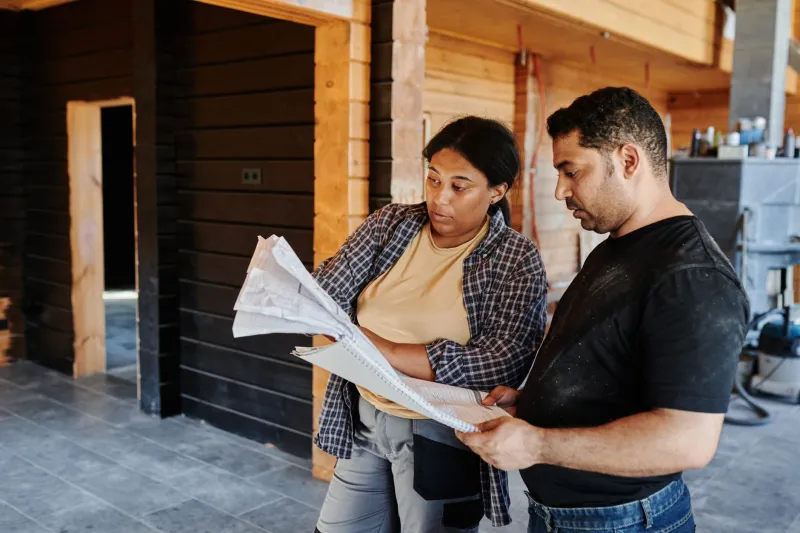
There is a conversation that happens on nearly every significant renovation project in New Jersey. It usually occurs somewhere between the demolition phase and the rough-in work, and it begins with a contractor presenting a change order. For homeowners who have never been through a major renovation before, that moment can feel like a betrayal. For those who have, it is simply part of the process — one that can be managed, minimized, and navigated intelligently if you know what to look for.
At Gleeson Contractors NJ, we believe homeowners deserve an honest account of why budgets move. Not the polished version designed to soften the blow, but the straightforward explanation that actually helps you protect your investment.
The Honest Truth About Estimates
A construction estimate is not a guarantee. It is an informed projection based on the visible conditions of your property, the current cost of materials, and the scope of work as it is understood at the time of signing. Each of those three variables is capable of changing — sometimes dramatically — before a project reaches completion.
Contractors who present estimates as fixed, immovable figures are either working on extraordinarily simple projects or they are not being fully transparent with you. The professionals who have built their reputations on decades of New Jersey residential and commercial work will tell you the same thing: complexity, age, and uncertainty are built into almost every structure, and no amount of preliminary inspection eliminates all of them.
That said, not every budget increase is created equal. Some are genuinely unavoidable. Others are the result of poor planning, inadequate communication, or a scope that was never properly defined in the first place.
Legitimate Reasons Costs Increase
Material Price Fluctuations
Anyone who has purchased lumber, copper pipe, or roofing materials over the past several years is well acquainted with the volatility of construction material pricing. Supply chain disruptions, tariff changes, regional demand spikes, and seasonal availability all influence what a contractor pays for materials between the time an estimate is written and the time those materials are actually ordered. On longer projects — those running three months or more — the gap between estimated and actual material costs can be meaningful.
A reputable contractor will include a material escalation clause in the contract that specifies how price increases above a defined threshold will be handled. If no such clause exists, ask for one before signing.
What the Walls Are Hiding
New Jersey's housing stock is old. A significant portion of the state's residential properties were built before modern construction codes existed, and many have been renovated, patched, and modified multiple times over the decades. When walls open up, subfloors come out, or ceilings come down, contractors regularly encounter conditions that were invisible during the initial walkthrough: deteriorated framing, outdated wiring that does not meet current code, plumbing that has been improperly modified, or moisture damage that has been silently spreading behind finished surfaces.
These discoveries are not contractor errors. They are the reality of working inside older structures. Addressing them is not optional — building codes require that deficiencies be corrected once they are exposed, and no responsible contractor will close a wall over a known safety hazard.
Scope Creep: The Budget Killer You Control
Of all the reasons a renovation budget grows, scope creep is the one that homeowners have the most direct power to prevent. Scope creep occurs when the defined project gradually expands through a series of small additions — each one seeming reasonable in isolation — until the total work is substantially larger than what was originally agreed upon.
It often begins innocently. You are already replacing the kitchen cabinets, so why not add the island? The bathroom tile is being pulled up anyway, so the floor heating seems like a natural addition. The contractor is already on-site, so the deck repair that was not in the original scope gets folded in.
Every one of those decisions has a cost. And because they are added incrementally rather than priced as a complete package, homeowners frequently lose track of the cumulative financial impact until the final invoice arrives.
How to Distinguish Justified Change Orders From Preventable Overruns
Not all change orders represent problems. A well-written change order is actually a sign of a professional operation — it documents what changed, why it changed, what it will cost, and how it affects the project timeline. That documentation protects both parties.
Here is how to evaluate a change order when one is presented:
Ask for the underlying cause. A change order triggered by a hidden structural condition is fundamentally different from one triggered by a material your contractor failed to account for in the original estimate. The first is unavoidable. The second raises questions about the quality of the initial bid.
Request documentation. If the change order relates to a concealed condition — rotted joists, inadequate electrical service, deteriorated pipe — ask to see the problem before it is remediated. Photographs and, where possible, a direct visual inspection give you confidence that the additional work is genuinely necessary.
Compare the pricing. A change order should be priced using the same labor and material rates reflected in the original contract. If the numbers appear disproportionately high relative to the scope of the additional work, ask for a line-item breakdown.
Separate your additions from contractor-initiated changes. Maintain a running record of every addition you have personally requested since signing the contract. When a change order arrives, you will be able to distinguish between costs you generated and costs that arose from field conditions.
Practical Strategies Before the Project Begins
The most effective budget protection happens before the first tool is lifted. Consider the following:
Build a contingency into your budget from day one. For renovations involving older New Jersey homes, a contingency of ten to fifteen percent above the contract price is a reasonable and prudent reserve. Treat it as an expected cost of doing business in an older structure, not as money you hope to recover.
Define the scope in writing with as much specificity as possible. Vague contracts invite disputes. Every material specification, finish selection, and inclusion should be documented before work begins. If a decision has not been made, note that explicitly and agree on a process for pricing it when the decision is finalized.
Establish a change order approval process. No additional work should proceed without a signed, written change order that specifies cost and timeline impact. Verbal agreements made in the field are the source of a remarkable number of post-project disputes.
Ask your contractor directly about risk areas. An experienced contractor who has worked extensively in New Jersey's housing market can identify the most likely sources of unforeseen conditions for your specific property type and age. That conversation, held early, allows you to plan rather than react.
The Takeaway
Budgets grow for reasons that range from genuinely unforeseeable to entirely preventable. The homeowners who navigate renovations most successfully are not those who demand ironclad fixed-price guarantees — they are the ones who understand the variables at play, build appropriate financial buffers, and establish clear communication processes with their contractors from the outset.
At Gleeson Contractors NJ, transparency is not a marketing position. It is how we operate. If you are planning a residential or commercial project anywhere in New Jersey, we welcome the opportunity to walk you through what a realistic, well-structured budget actually looks like — before you sign anything.