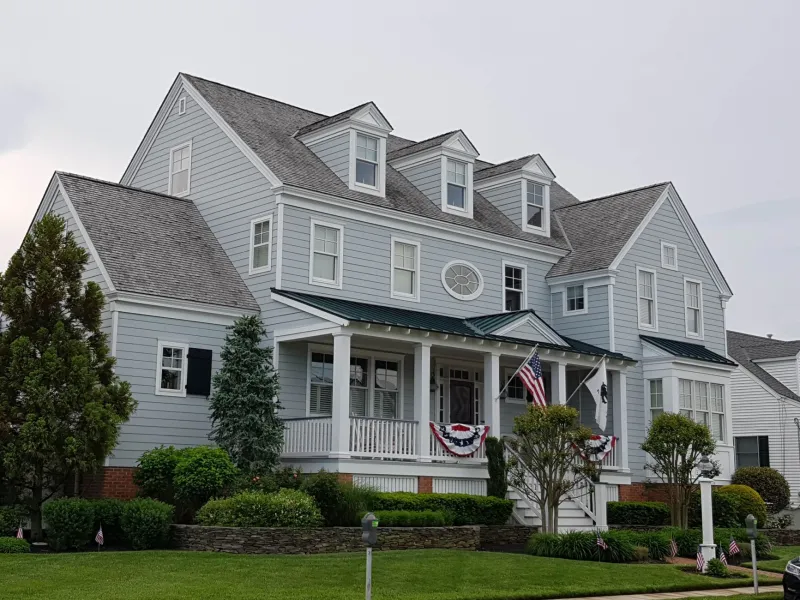
Speed Costs More Than You Think: The True Price of Rushing a Renovation in New Jersey

There is a persistent belief among homeowners that urgency is a form of leverage — that pressing a contractor to finish faster is simply a matter of will and organization. In practice, however, the opposite is almost universally true. When renovation timelines are compressed beyond what a project's natural sequence demands, costs rise, quality suffers, and the savings a homeowner hoped to protect tend to disappear in ways that are difficult to trace back to the original decision.
For New Jersey homeowners specifically, the conditions that make fast-tracking a renovation appealing are the same conditions that make it particularly dangerous. A dense housing market, high labor demand, complex municipal permitting structures, and a climate that punishes construction shortcuts all conspire to punish impatience in ways that are both predictable and preventable.
The Premium Labor Problem
Contractors in New Jersey operate in one of the most competitive skilled labor markets on the East Coast. Qualified tradespeople — electricians, plumbers, framers, tile setters — are in consistent demand across residential and commercial sectors. When a homeowner demands an accelerated schedule, the contractor faces a straightforward problem: the crew already has commitments.
Meeting an artificially shortened deadline typically requires one of two solutions. The first is overtime, which carries a significant wage premium. The second is subcontracting work to crews who happen to be available — and availability itself is often a signal worth examining. Experienced tradespeople in Bergen County, Essex County, or Monmouth County rarely have open weeks sitting idle. When a crew is immediately available on short notice, it warrants a closer look at why.
Either path increases the labor line on a project budget. Homeowners who negotiate a fixed-price contract may not see this cost directly, but they absorb it through reduced scope, thinner margins that incentivize corner-cutting, or change orders that appear as the project progresses.
Material Sourcing in a Compressed Market
New Jersey's renovation market operates under supply chain pressures that differ meaningfully from less-dense states. Certain materials — specialty tile, custom millwork, engineered lumber, specific fixture lines — carry lead times that cannot be negotiated away regardless of how urgently a homeowner needs them. A kitchen renovation that requires custom cabinetry from a manufacturer in Pennsylvania or a stone countertop fabricated locally in Union County will not move faster simply because a deadline has been imposed.
When timelines are compressed, contractors face a familiar choice: wait for the specified material or substitute. Substitutions are not inherently problematic, but substitutions made under time pressure and without careful homeowner review frequently result in finishes, dimensions, or performance characteristics that fall short of what was originally planned. The cost of correcting a mismatched tile pattern or replacing an undersized vanity after installation is almost always greater than the cost of waiting for the correct material in the first place.
There is also the matter of delivery surcharges. Expedited shipping on construction materials carries real cost, and in a state where warehouse space is at a premium and logistics corridors through the northeastern corridor are chronically congested, rush delivery is neither cheap nor reliable.
What Permitting Timelines Actually Mean
New Jersey's municipal permitting process is not a formality. Depending on the scope of work and the municipality in question, permit approvals for structural, electrical, or plumbing work can take weeks. Some townships in Middlesex County, Ocean County, and Hudson County have inspection backlogs that extend beyond what any homeowner's preferred completion date can accommodate.
A contractor who agrees to a compressed timeline without accounting for permitting realities is not offering efficiency — they are offering false confidence. Work completed without required inspections, or inspections scheduled before work is genuinely ready, creates liability that attaches to the property itself. When that home is eventually sold, unpermitted or failed-inspection work becomes a negotiating liability and, in some cases, a legal one.
Patient scheduling that accounts for permitting timelines is not bureaucratic inconvenience. It is the difference between a renovation that closes cleanly and one that resurfaces as a problem during a future real estate transaction.
The Compounding Cost of Deferred Defects
Perhaps the most financially consequential aspect of rushed renovations is the category of defects that do not appear immediately. Waterproofing applied before adequate substrate drying time, grout installed before tile adhesive has cured properly, insulation compressed behind drywall hung ahead of inspection — these are not visible failures at project completion. They are failures that emerge over months or years, often after contractor warranties have lapsed and after the homeowner has moved on from the project mentally and financially.
In New Jersey's climate, where freeze-thaw cycles stress exterior assemblies and high humidity stresses interior finishes, the margin for installation error is genuinely narrow. A bathroom tile installation that might survive for years in a drier climate will fail within a season if the substrate was not properly prepared because the schedule demanded the tile go down before conditions were right. A foundation waterproofing application that would perform adequately in milder conditions will fail in a New Jersey winter if it was applied to concrete that had not fully cured.
The repair costs for these deferred defects are not trivial. Retiling a bathroom, addressing moisture intrusion behind a finished wall, or revisiting a drainage installation after landscaping has been restored all carry costs that dwarf what a measured, properly sequenced original installation would have required.
Patience as Financial Strategy
The framing of patience as mere inconvenience is one of the more costly misconceptions a homeowner can carry into a renovation project. A realistic schedule — one that accounts for material lead times, permitting cycles, crew availability, and the natural sequence of construction phases — is not a contractor's attempt to avoid accountability. It is a financial instrument.
Homeowners who resist the pressure to compress timelines without cause tend to receive work that is better sequenced, better inspected, and better documented. They avoid the premium labor costs associated with rush scheduling. They receive the materials they actually specified. And they reduce the probability of encountering, two winters from now, a repair bill that traces directly back to a decision made in haste.
At Gleeson Contractors NJ, the projects that proceed smoothly from start to final walkthrough are almost never the ones that were driven by urgency. They are the ones where the homeowner and the contractor agreed on a realistic timeline at the outset — and then held to it. That discipline, unglamorous as it may seem, is consistently the most reliable predictor of a renovation that delivers lasting value rather than compounding regret.