When More Is Less: How an Honest Contractor Protects New Jersey Homeowners From Unnecessary Renovations

There is a particular kind of pressure that builds during a renovation consultation. A homeowner arrives with a list — sometimes a long one — of improvements they have been quietly assembling for months, perhaps years. The contractor across the table could simply nod, write up a scope of work, and collect a signature. It would be the easier path. It would also be the wrong one.
At Gleeson Contractors NJ, we have built our reputation in this state not only by completing projects well, but by occasionally advising homeowners not to begin them at all. That position may seem counterintuitive for a construction business. It is not. It reflects a straightforward belief: a client who trusts us to tell them the truth will return, and will send others. A client who feels oversold will not.
What follows is an honest account of how ethical contractors identify over-renovation risks — and how New Jersey homeowners can protect themselves from spending money their homes do not need them to spend.
The Difference Between Want and Need
The vocabulary of home improvement is littered with language designed to blur this line. Upgrades, enhancements, investments, improvements — these words carry a positive charge that makes it difficult to ask the harder question: does this project solve an actual problem, or does it simply satisfy a preference?
Both motivations are legitimate. Homeowners are entitled to update a kitchen because they find it dated, or to finish a basement because they want additional living space. But those decisions should be made with clear eyes, not under the impression that the work is structurally necessary when it is not.
The distinction matters most in two scenarios: when a homeowner is preparing to sell, and when a homeowner is operating under a constrained budget. In both cases, the risk of over-renovation — spending significantly more than the improvement will return in either comfort or resale value — is highest.
What Over-Renovation Actually Looks Like
In New Jersey's varied housing market, over-renovation is not rare. It tends to appear in predictable forms.
A homeowner in a neighborhood where comparable properties sell between $450,000 and $520,000 invests $85,000 in a primary suite addition. The addition is well-built and genuinely beautiful. It also fails to move the sale price beyond the neighborhood ceiling — a phenomenon real estate professionals call being "over-improved for the market." The homeowner recovers perhaps half of what they spent.
Alternatively, a homeowner replaces perfectly functional windows because a salesperson suggested they were inefficient, when a professional energy audit would have revealed that air sealing and insulation — a fraction of the cost — would have addressed the problem more effectively.
Or a structural concern is identified during an inspection, and rather than addressing the specific issue, a homeowner is guided toward a comprehensive renovation that bundles the necessary repair with a series of cosmetic changes they had not previously considered.
These are not hypothetical scenarios. They are patterns that experienced contractors recognize — and that ethical ones name plainly.
The Contractor's Obligation to Speak First
A contractor who identifies an over-renovation risk during a consultation faces a genuine professional choice. Raising the concern may reduce the scope of work or eliminate the project entirely. Staying quiet preserves the contract.
The short-term calculus is obvious. The long-term calculus is different.
New Jersey homeowners talk to one another. Communities here — whether in Bergen County suburbs, Shore towns, or Union County neighborhoods — are connected, and word of mouth remains one of the most powerful forces in the residential contracting market. A contractor known for honest counsel will consistently outperform one known for maximizing invoices.
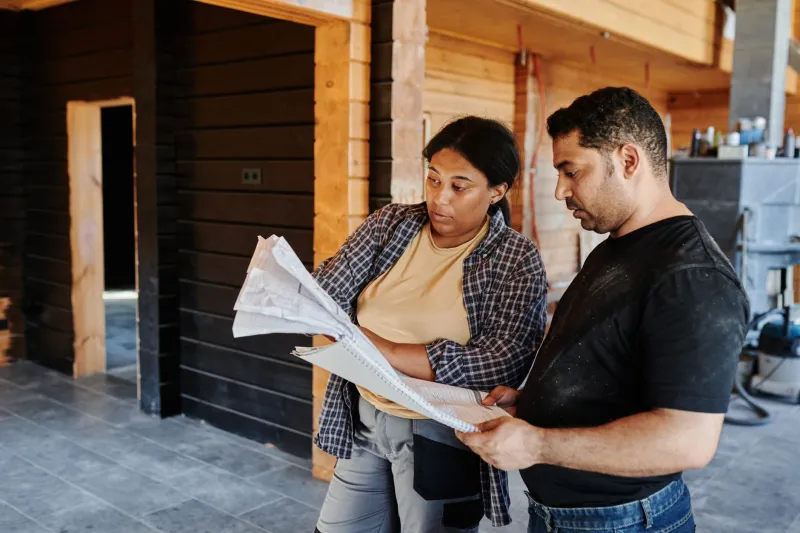
At Gleeson Contractors NJ, our consultations begin with a question that rarely appears on a project intake form: what is this renovation meant to accomplish? The answer shapes everything that follows. If the goal is resale value, we provide a frank assessment of what the local market will and will not reward. If the goal is comfort or functionality, we identify the most efficient path to that outcome — which is not always the most expensive one.
Structural Need Versus Aesthetic Preference: A Practical Framework
Helping homeowners distinguish between genuine need and personal preference requires a consistent framework. Several questions are particularly useful.
Is there a documented deficiency? A foundation crack that has been assessed by a structural engineer, a roof that has failed inspection, plumbing that no longer meets code — these represent documented deficiencies with clear remediation requirements. An outdated kitchen that functions perfectly well does not.
What is the cost of deferral? Some problems grow more expensive when left unaddressed. A slow roof leak becomes a structural repair. A minor drainage issue becomes a basement waterproofing project. Other problems — cosmetic ones, primarily — carry no meaningful penalty for delay. Knowing which category a project falls into changes the urgency calculus entirely.
Does the improvement align with the property's context? A renovation that would be entirely appropriate for one property may be financially irrational for another, depending on neighborhood comparables, the home's age, and the homeowner's timeline. Context determines value.
Is there a less costly path to the same outcome? This question is the one most frequently skipped in renovation conversations. A full bathroom gut renovation may solve a moisture problem. So might improved ventilation and targeted tile repair at a quarter of the cost. The contractor who asks this question — and answers it honestly — is the one worth hiring.
Building Trust Through Restraint
There is a broader principle at work here, one that shapes how Gleeson Contractors NJ approaches every client relationship in New Jersey.
The construction industry has historically struggled with a trust deficit. Homeowners approach contractors with a degree of wariness that is, in many cases, earned by past experience. Opaque pricing, scope creep, and projects that somehow expand beyond their original parameters are common enough grievances that they have become cultural shorthand for contractor behavior.
Reversing that perception requires more than competent work. It requires a demonstrated willingness to put the homeowner's interest ahead of the invoice. That willingness shows most clearly not in the projects a contractor completes, but in the ones they advise against.
When a homeowner comes to us with a renovation plan and we recommend a more modest intervention, or suggest that a specific project is unlikely to serve their goals, we are not being conservative. We are being honest. And in a market where honesty is not always the default, that distinction carries real weight.
What New Jersey Homeowners Should Expect From Every Consultation
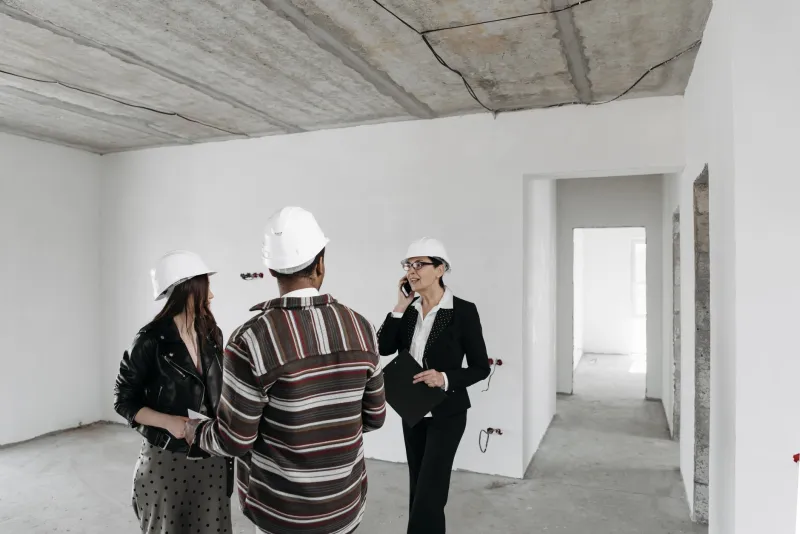
If you are preparing to engage a contractor for a renovation project — whether a kitchen refresh, a structural repair, or a full addition — the consultation itself is a meaningful data point. A contractor who listens carefully before proposing scope, who asks about your goals rather than assuming them, and who is willing to suggest a smaller project when the larger one isn't warranted, is demonstrating something important about how they will behave throughout the engagement.
Ask directly: is this project necessary? What happens if I defer it? Are there less costly alternatives? A contractor worth trusting will answer these questions without hesitation.
At Gleeson Contractors NJ, we believe that the most valuable thing we can offer a homeowner is not always a completed renovation. Sometimes it is a clear-eyed conversation that saves them from one they did not need.