Four Seasons, One Roof: How New Jersey's Punishing Climate Demands a Smarter Inspection Calendar
National guidelines often recommend that homeowners inspect their roofs once per year. In much of the country, that cadence is adequate. In New Jersey, it is not.
The Garden State occupies a geographic position that makes it exceptionally demanding on residential roofing systems. Situated along the Atlantic seaboard, the state absorbs nor'easters, tropical remnants, heavy snowfall, ice accumulation, and summer humidity in a single calendar year. Each of these weather patterns exerts a different kind of stress on roofing materials, and the cumulative effect compounds faster than most homeowners realize. By the time a ceiling stain appears or shingles curl visibly from the street, the underlying damage is rarely confined to a single problem area.
Understanding why New Jersey's climate is so uniquely demanding — and what a properly structured inspection schedule looks like — can mean the difference between a routine maintenance call and a full roof replacement.
What Makes New Jersey's Climate Particularly Hard on Roofing Systems
The state's weather is defined by transition. Unlike regions with predictable dry seasons or stable cold periods, New Jersey oscillates repeatedly between freezing and thawing temperatures throughout late autumn and early spring. This freeze-thaw cycle is among the most destructive forces a roof can endure.
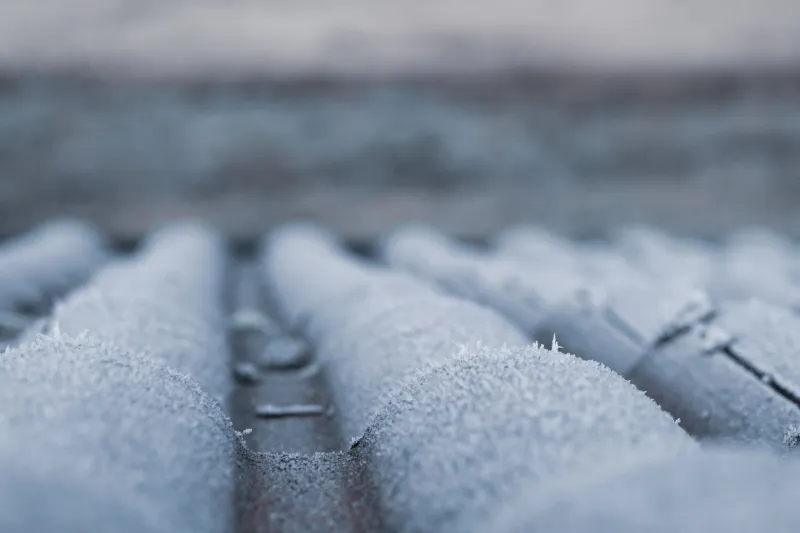
When moisture infiltrates even the smallest gap in flashing, a cracked shingle, or a compromised sealant joint, it expands upon freezing. As temperatures rise, that same moisture contracts. This repeated expansion and contraction pries materials apart incrementally. What begins as a hairline separation gradually becomes a pathway for sustained water intrusion.
Nor'easters compound this problem significantly. These storms arrive with sustained wind speeds capable of lifting improperly fastened shingles, driving rain horizontally beneath roofing layers, and depositing substantial ice loads on flat or low-pitch sections. A single severe nor'easter can undo years of otherwise sound roof maintenance if underlying vulnerabilities exist.
Summer presents a different set of challenges. High humidity and elevated temperatures accelerate the aging of asphalt shingles, causing granule loss and surface brittleness. Roofing materials that perform reliably in moderate climates may reach the end of their functional lifespan years earlier in New Jersey's heat-and-humidity conditions.
The Four Inspection Windows Every New Jersey Homeowner Should Know
Given the range of seasonal threats, a single annual inspection is insufficient to catch damage before it becomes costly. Contractors familiar with New Jersey's regional patterns typically recommend four distinct inspection windows throughout the year.
Late Winter or Early Spring is the most critical period. After a full season of cold weather, freeze-thaw cycling, and potential ice dam formation, the roof should be evaluated for lifted or missing shingles, damaged flashing around chimneys and vents, and any signs of moisture intrusion in the attic. Ice dams — ridges of ice that form at the roof's edge and prevent meltwater from draining — are a particular concern along northern-facing slopes and can cause significant deck damage if left unaddressed.
Late Spring offers an opportunity to assess damage from the heavier rainfall that typically accompanies the season's transition. This is also an appropriate time to clear gutters and downspouts of debris accumulated over winter, as blocked drainage is a primary contributor to fascia rot and soffit deterioration.
Late Summer or Early Fall allows contractors to evaluate how the roofing system has held up under prolonged heat exposure and to identify any granule loss or surface cracking before the cold season returns. This window is also the preferred time for any repairs, as temperatures and conditions are generally favorable for adhesive materials and sealants to cure properly.
Post-Storm Assessments should occur after any significant weather event — nor'easters, thunderstorms with high wind, or periods of extended ice accumulation. These evaluations do not need to be exhaustive, but a visual check from a safe vantage point, followed by a professional inspection if anomalies are observed, can prevent minor storm damage from developing into a structural concern.
Early Warning Signs Specific to This Region
Certain indicators of roof stress are particularly common in New Jersey's climate and warrant immediate professional attention when identified.
Granule accumulation in gutters is among the earliest signs that asphalt shingles are losing their protective surface coating. In a climate with significant UV exposure and thermal cycling, granule loss accelerates the aging process and reduces the shingle's ability to shed water effectively.
Staining on attic sheathing or insulation often indicates that ice dams or wind-driven rain has breached the roofline. Because attic spaces are rarely inspected by homeowners, this damage can persist for months before manifesting as a visible interior stain.
Lifted or cupped shingles along ridges and edges are frequently caused by wind uplift during nor'easters. Once the adhesive bond between shingles is compromised, subsequent storms can peel sections away entirely.
Daylight visible through the roof deck when inspecting from the attic is a clear indication that the structural integrity of the roofing system has been compromised and requires immediate professional evaluation.
Why Waiting for a Leak Is the Wrong Strategy
Many homeowners operate under the assumption that a roof requires attention only when it begins to leak. This logic is understandable but consistently leads to higher costs and more extensive repairs.
By the time water penetrates through roofing layers, past the underlayment, and into the living space, it has typically been traveling a path of least resistance for some time. The source of a visible interior leak is rarely located directly above the stain. Water migrates along rafters, sheathing, and insulation before finding an exit point, meaning the actual area of damage may be considerably broader than a single wet spot suggests.
In a climate as variable as New Jersey's, the gap between early-stage roof damage and active water intrusion can close rapidly. A compromised flashing joint that is manageable in October may allow significant moisture entry by January. Addressing vulnerabilities during scheduled inspections — before a storm arrives to exploit them — is consistently more cost-effective than emergency repairs undertaken in adverse conditions.
Building a Long-Term Relationship with a Qualified Local Contractor
The most effective approach to roof maintenance in New Jersey is not reactive — it is relational. Homeowners who work with a consistent, licensed local contractor develop a documented history of their roof's condition over time. That record allows contractors to identify deterioration trends, anticipate material failures, and recommend timely interventions before minor issues escalate.
At Gleeson Contractors NJ, our familiarity with the specific demands that New Jersey's climate places on residential roofing systems informs every inspection we conduct. We understand that a roof in Monmouth County faces different seasonal pressures than one in Sussex County, and we structure our evaluations accordingly.
The roof over your head is one of the most consequential components of your home's envelope. In a state where the weather rarely offers a quiet season, treating it as a passive system that requires attention only when something goes wrong is a risk no homeowner should accept. A structured, regionally informed inspection schedule is not an added expense — it is the most reliable investment a New Jersey homeowner can make in the long-term integrity of their property.