Halfway There, Nowhere to Turn: What New Jersey Homeowners Must Know Before a Contractor Walks Off the Job
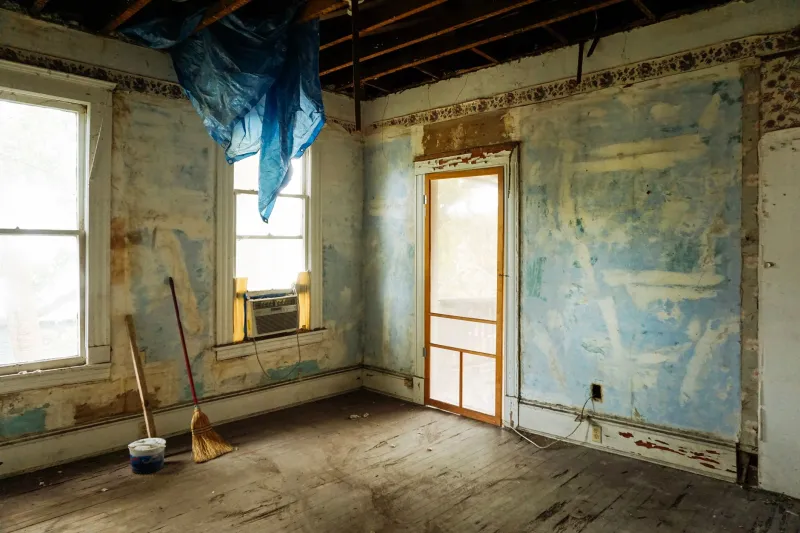
Few construction scenarios are more disorienting than a job site that goes suddenly, inexplicably quiet. Equipment disappears overnight. Phone calls go unanswered. The crew that was framing your addition last Tuesday has not returned by Friday. What began as a renovation project has transformed into something far more complicated: an abandoned job site, a partially spent deposit, and a homeowner left to piece together what went wrong.
Contractor abandonment is not a rare occurrence in New Jersey. It is, however, a preventable one—provided homeowners understand why it happens and take deliberate steps during the bidding and contracting phases to reduce their exposure.
Why Contractors Walk Away: The Financial Reality Behind the Disappearing Act
The most common cause of mid-project abandonment is not negligence or bad faith. It is financial collapse.
Many small and mid-sized contracting firms operate on extremely thin margins. When material costs spike unexpectedly—as they have with notable volatility since 2020—a contractor who priced a job months earlier can find themselves absorbing losses on every working day. If that contractor is simultaneously managing several underfunded projects, the financial pressure compounds rapidly. Rather than renegotiate or communicate transparently, some contractors simply stop showing up, hoping the situation resolves itself or that another job will cover the shortfall.
There are other contributing factors as well. Licensing or insurance lapses can make a contractor legally unable to continue work under New Jersey law. Subcontractor disputes—where a specialty trade walks off the job after a payment disagreement—can stall a general contractor's entire operation. Personal circumstances, including health crises or business dissolution, also play a role. In some cases, particularly with unlicensed operators, abandonment is premeditated from the start.
The result for the homeowner is the same regardless of the cause: an unfinished structure, a depleted budget, and a complicated path forward.
Red Flags Worth Recognizing Before Work Begins
The warning signs of a contractor likely to abandon a project are often visible during the consultation and bidding process—if homeowners know what to look for.
Unusually low bids are frequently the first indicator. A bid that falls significantly below competing estimates is not necessarily a bargain. It may reflect a contractor who has miscalculated material costs, intends to cut corners, or is desperate for upfront cash to service debts on other projects. In New Jersey's current construction market, a bid that seems too good to be true almost always warrants further scrutiny.
Pressure for large upfront deposits should also raise concern. While some deposit is standard practice and legally permissible in New Jersey, requests for fifty percent or more of the total project cost before work begins are a meaningful warning sign. A financially stable contractor does not typically require a homeowner to pre-fund the entire material and labor budget before a foundation is poured.
Vague or incomplete documentation is another signal. A contractor who is reluctant to provide a detailed written scope of work, a payment schedule tied to specific milestones, or proof of current insurance and licensure may be operating in circumstances that make project completion uncertain.
Poor communication patterns during the consultation phase tend to persist and worsen once work begins. If a contractor is slow to return calls, dismissive of detailed questions, or unable to provide references from recently completed projects in New Jersey, those behaviors are informative.
What New Jersey Law Provides—and What It Does Not
New Jersey's Consumer Fraud Act offers meaningful protections to homeowners who enter into home improvement contracts. Under state law, contractors performing home improvement work must be registered with the New Jersey Division of Consumer Affairs. Contracts exceeding $500 must be in writing and include specific disclosures. Violations of these requirements can constitute consumer fraud, which carries significant legal consequences for the contractor.
However, legal recourse after abandonment is not the same as prevention. Filing a complaint with the Division of Consumer Affairs or pursuing a civil claim in Superior Court takes time, money, and energy—none of which restores the project timeline or returns funds already spent. The more practical approach is using the protections the law affords as a framework for vetting contractors before any agreement is signed.
Verify registration status through the Division of Consumer Affairs database before meeting with any contractor. Confirm that their general liability insurance and workers' compensation coverage are current and sufficient for the scope of your project. These are not bureaucratic formalities. They are meaningful indicators of a contractor's operational stability.
Contractual Safeguards That Reduce Abandonment Risk
A well-constructed contract is the most effective tool a homeowner has against mid-project walkouts. Several provisions are particularly important in the New Jersey context.
Milestone-based payment schedules tie disbursements to verified progress rather than calendar dates. Rather than releasing funds on a weekly basis, payments are made when specific, inspectable phases of work are complete—foundation poured, framing finished, rough electrical passed inspection. This structure removes the contractor's financial incentive to take the money and slow down.
Abandonment and cure provisions define, in explicit terms, what constitutes abandonment and what remedies are available. A clause specifying that work stoppage exceeding a defined number of days without written notice constitutes material breach—and entitles the homeowner to engage a replacement contractor and pursue damages—provides a clear legal path if the situation deteriorates.
Lien waiver requirements protect homeowners from the secondary problem of mechanic's liens filed by subcontractors or suppliers who were never paid by the original contractor. Requiring the general contractor to provide conditional lien waivers from major subcontractors at each payment milestone is a standard professional practice that many homeowners overlook.
Dispute resolution clauses that specify mediation before litigation can reduce the time and cost of resolving abandonment disputes without eliminating the homeowner's right to pursue legal remedies if necessary.
Choosing Stability Over Availability
In a competitive construction market, homeowners are sometimes tempted to award contracts based primarily on who can start the soonest. Availability, however, is not the same as reliability. A contractor who can begin immediately may be doing so because their pipeline has dried up—a circumstance that can itself be a sign of financial or reputational difficulty.
The most dependable contractors in New Jersey tend to be in demand. They have established relationships with local subcontractors and suppliers. They carry adequate insurance, maintain active registrations, and can point to a portfolio of completed projects with verifiable references. They may not be the cheapest option, and they may not be available to start next week.
For homeowners, that patience is an investment. A project completed by a stable, professional contractor is worth considerably more than one begun quickly by a firm that disappears before the drywall goes up.
At Gleeson Contractors NJ, we believe that transparency before the first nail is driven is what separates a successful project from a cautionary tale. Understanding why contractors walk away—and taking deliberate steps to choose one who will not—is among the most important decisions a New Jersey homeowner can make.